Starting an Urban Homestead Business: Small-Space Ideas That Sell
Are you the friend everyone asks for a jar of your jam, one of your hand-knit hats or a tray of your tomato seedlings? Then you might already have the beginnings of an urban homestead business.
An urban homestead business is simple at heart: you make something by hand or grow it in a small space, and you sell it to people nearby. You don’t need acres, a barn or a big investment. A kitchen, a spare room, a garage or a sunny backyard can be enough. Here’s how to get started.
Key Takeaways
- Choose something you love making, because you’ll make a lot of it.
- Keep your product line small and simple, especially at first.
- Check your state’s cottage food laws and local business rules before selling.
- Price for your time and materials, not just what feels polite.
What Can You Sell?
Handmade and homegrown goods that do well in town include:
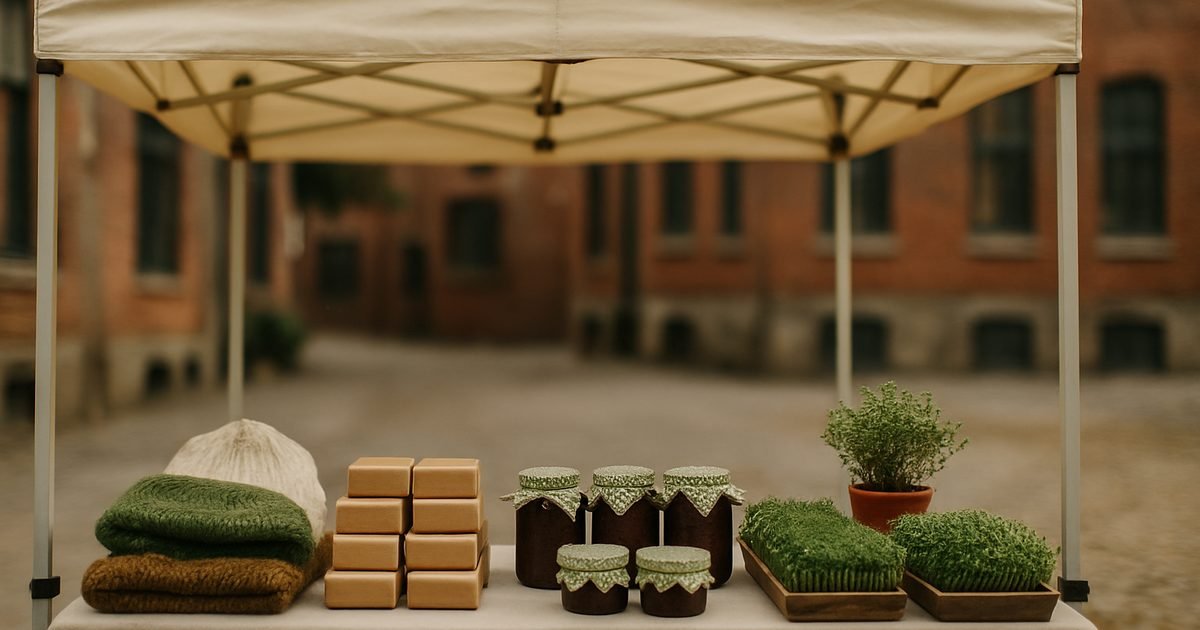
- Fiber crafts: Knitted hats, scarves and mittens, crocheted baby blankets, quilts and dishcloths.
- Bath and body: Handmade soap, lip balm and beeswax wraps.
- Home goods: Candles, wreaths, aprons, potholders and wooden cutting boards.
- Cottage foods: Breads, cookies, granola, jams and jellies, honey and dried herb blends, depending on your state’s rules.
- Garden goods: Microgreens, herb plants, vegetable starts, cut flowers and garlic.
- Eggs and honey, where your city allows backyard hens and bees.
Spend some time at local craft fairs and farmers markets. Notice what’s selling, what’s missing and what people ask for.
Do What You Love (and Test the Market)
You’ll be making the same item many times, so pick something you enjoy. Before you invest in supplies, make a small batch and offer it to friends, coworkers or a local online group. Their feedback, and whether they pay, will tell you a lot.
Understand the Rules
- Cottage food laws. Most states allow home kitchens to sell certain low-risk foods, like baked goods, jams and candy, directly to customers. Rules on labeling, where you can sell, sales limits and registration vary by state. Your state department of agriculture or health department has the details. Low-acid canned goods and foods that need refrigeration are usually not allowed.
- Business license and sales tax. Many cities require a simple business license, and most states require you to collect sales tax on certain items.
- Zoning. Home businesses are often allowed, but customer traffic and signage may be limited.
- Product labels. Soap, lotions and foods have specific labeling rules. Look them up before you print labels.
- Insurance. Product liability coverage is wise, and many markets require it.
Keep Your Product Line Simple
One of the most common mistakes new makers make is offering too much. Twenty different products in dozens of colors means more supplies, more decisions and more leftover stock.
Instead:
- Pick one or two signature products.
- Offer a few colors, scents or flavors of each.
- Make them well, and make them consistently.
For example, a knitter might offer one hat pattern in five colors and three sizes. That’s still plenty of choice for customers, and far less stress for you.
Be Careful With Custom Orders
Custom orders sound like a great idea, but they can eat up your time for very little profit. Offer simple customizations, like a name added to a finished item or a choice of color, rather than designing something new for every customer.
Price Fairly, Including Your Time
Add up your materials, packaging, booth fees and a fair hourly wage for your time. Then check what similar items sell for locally. Underpricing is common among new makers, and it’s hard to raise prices later. Quality handmade goods deserve a fair price.
Where to Sell
- Word of mouth. Friends, family, coworkers, church and school groups are your first customers.
- Farmers markets and craft fairs. Great for building a loyal following.
- Local shops. Some boutiques, cafés and garden centers sell local goods on consignment.
- Online. A simple online shop or social media page lets customers find you and order ahead.
- Business cards and a sign. Hand them out generously and include them with every purchase.
Start Small, Grow Slowly
You don’t need a lot of money to start. Use what you have, buy supplies in small amounts at first and reinvest early profits back into the business. As sales grow, you can buy in bulk and upgrade your tools.
Keep Simple Records
From your very first sale, write down what you spend on supplies and what you earn. A notebook or a basic spreadsheet is plenty. After a few months, you’ll see which products sell best, which ones take too much time for the money, and when your busy seasons are. Many makers find that a few weeks before the holidays bring in a big share of the year’s sales, so plan your making schedule around that.
Frequently Asked Questions
Can I sell food I make at home?
In many states, yes, for certain low-risk foods under cottage food laws. Check your state’s specific rules first.
What sells best at craft fairs?
Useful, affordable items that make good gifts tend to do well, especially before the holidays.
Do I need a business license?
Often, yes. Check with your city or county clerk.
An urban homestead business turns the skills you love into income, right from home. For more ideas, read our posts on urban homesteading and 10 work-at-home ideas for homesteaders.
Get printable checklists for making your own products and creating clothing and textiles in our free Animals, Skills & Planning pack, available in our Free Downloads library.
Prefer to watch or listen? More practical homestead tips are on our YouTube channel — short, useful, no fluff. Subscribe on YouTube → The Homestead Frontier
Get Weekly Homestead Know-How That Actually Works
Practical tips on gardening, food preservation, DIY repairs and self-reliance, straight to your inbox. Free, no fluff.
Free. Unsubscribe anytime. We never share your email.