9 Common Mistakes New Homesteaders Make (and How to Avoid Them)
This page talks about common mistakes new homesteaders make, like starting too big or getting too many animals too soon. It gives tips on how to start small and avoid costly errors. You can read it to learn how to plan your homestead wisely and download a free guide for more help.
Every experienced homesteader has a story that starts with, “Our first year, we thought it would be a great idea to…” Ours usually involve a garden far too big to weed and a few too many animals too soon. Mistakes are part of learning. But some of them cost a lot of time, money and heartache, and they’re easy to avoid if someone warns you ahead of time.
So consider this your friendly warning. Here are the mistakes we see new homesteaders make most often, and what to do instead.
Key Takeaways
- Start smaller than you think you should. You can always add more next year.
- Add animals slowly. They need care every day, no matter what.
- Research land thoroughly before buying: water, access, flooding, zoning and neighbors.
- Budget for the unexpected, and lean on your community.
Mistake 1: Starting Too Big
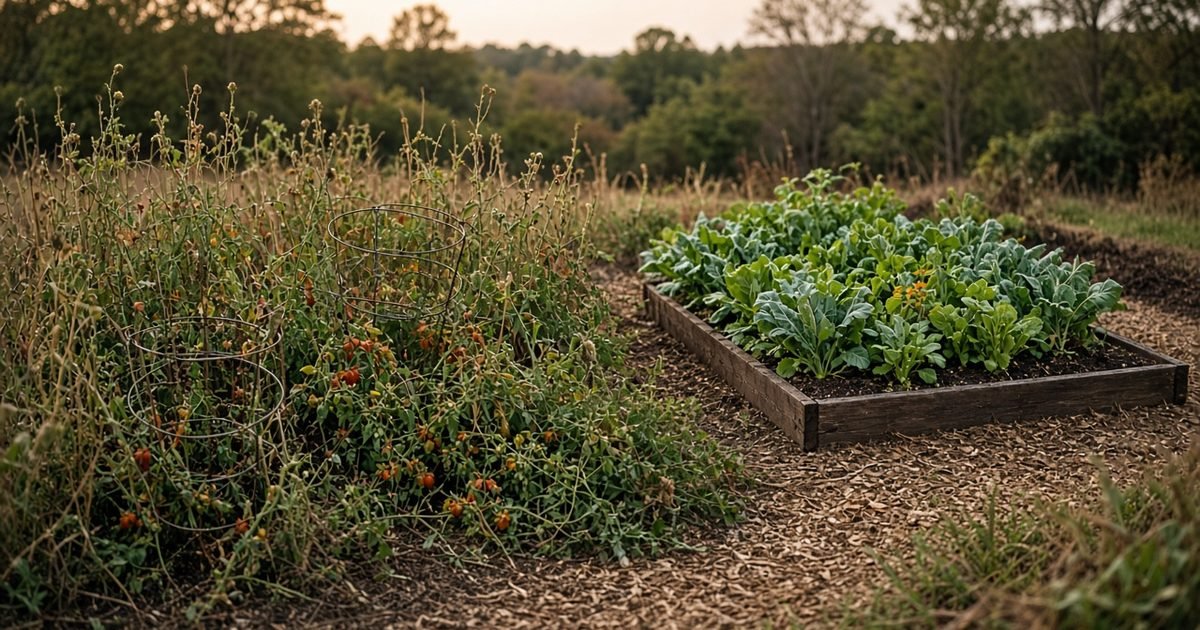
It’s the classic. You finally have space, so you plow up a huge garden, order fifty chicks and plant an orchard in one spring. By July the garden is a jungle of weeds and you’re exhausted.
Do this instead: Start with a garden you can keep weeded, then expand a bit each year. A small, well-tended plot usually produces more than a big one that’s been neglected. It’s the first lesson in our Audio Tips for good reason: “Don’t start too big.”
Mistake 2: Getting Too Many Animals Too Soon
Animals are the heart of many homesteads, but they don’t take days off. A milk cow needs milking twice a day, every day. Goats escape. Chickens need secure housing against predators. If you still work an off-farm job, early-morning chores before a commute get old fast.
Do this instead: Add one type of animal at a time, starting with something forgiving like laying hens. Get their housing, fencing, feed plan and a vet contact lined up before they arrive.
Mistake 3: Underestimating the Time It Takes
Our homesteading ancestors worked dawn to dusk because they had no choice. Today most of us balance homesteading with jobs, school runs and everything else. New homesteaders often forget that after a long workday, they may not feel like weeding or mucking stalls.
Do this instead: Be realistic about your weekly hours. Choose projects that fit that budget of time, and use low-maintenance methods like mulching, drip irrigation and perennial crops to cut down daily work.
Mistake 4: Buying Land Sight Unseen
Online listings can make any property look like paradise. People have bought land without visiting, only to find steep ravines, no buildable spot or no legal access.
Do this instead: Walk the property in person, ideally in different seasons and after a heavy rain. Bring a notebook and a list of questions.
Mistake 5: Ignoring Water and Flooding
That peaceful creek can become a torrent. A dry creek bed near the house site can flood during a long wet spell. And land without a reliable water source can be very costly to fix.
Do this instead:
- Check the property on the FEMA Flood Map Service Center, and ask neighbors about past flooding.
- Find out whether there’s an existing well, what it produces and how the water tests. If there’s no well, get local estimates for drilling.
- Learn your state’s water rights rules, especially in the West.
Mistake 6: Overlooking Access, Utilities and Clearing Costs
Heavily wooded or remote land can be beautiful. But clearing space for a driveway, house site and garden, then bringing in power, can cost far more than the land itself.
Do this instead: Get quotes for driveway work, clearing, power line extension and septic before you make an offer. Ask whether the lot has passed a perc test if you’ll need a septic system.
Mistake 7: Not Checking Zoning, Covenants and Neighbors
Some cheap parcels come from a large farm carved into small lots, and you may have no say in what gets built next door. Other properties carry covenants limiting livestock, outbuildings or even gardens. And land next to popular hunting areas can make fall seasons tense.
Do this instead: Read the zoning code and any deed restrictions or HOA covenants. Drive the area at different times of day and during hunting season. Chat with neighbors, who are often your best source of local knowledge.
Mistake 8: Skipping the Budget
Fencing, feed, tools, seeds, fuel, repairs: it adds up quickly. Many new homesteaders spend their savings on land and animals, then have nothing left when the well pump fails.
Do this instead: Build a simple homestead budget with a line for emergencies. Buy good used tools, and prioritize the infrastructure (fencing, water, shelter) that everything else depends on. Before you add animals, check your fence first.
Mistake 9: Trying to Do It All Alone
Homesteading was never meant to be a solo project. Neighbors lent tools, shared labor at harvest and helped each other through hard winters.
Do this instead: Introduce yourself to neighbors, join a local homesteading or gardening group, connect with your county extension office, and find an experienced farmer you can call when something goes sideways. Someday you’ll be the one helping the next newcomer.
Frequently Asked Questions
What’s the biggest mistake new homesteaders make?
Taking on too much, too fast. Nearly every other problem gets easier when you start small and grow steadily.
What should I check before buying homestead land?
Water source and quality, flood risk, legal road access, zoning and covenants, soil, utilities, clearing costs and the neighborhood. Visit in person, more than once if you can.
How do I avoid burnout?
Set realistic goals, choose low-maintenance systems, take a real day of rest when you can, and celebrate small wins, like that first egg or the first jar of jam.
Mistakes will happen. They’re how we learn. But avoiding these nine will save you a lot of frustration. If you’re still at the dreaming stage, read 9 small steps to a backyard homestead and start practicing right where you are.
Avoid more beginner headaches with our free Survival Homestead Starter Guide, available in our Free Downloads library.
Prefer to watch or listen? More practical homestead tips are on our YouTube channel — short, useful, no fluff. Subscribe on YouTube → The Homestead Frontier
Get Weekly Homestead Know-How That Actually Works
Practical tips on gardening, food preservation, DIY repairs and self-reliance, straight to your inbox. Free, no fluff.
Free. Unsubscribe anytime. We never share your email.