Ball Wide Mouth Pint Mason Jars Review: 16 oz Jars for Canning, Freezing and Pantry Storage
This page reviews the Ball Wide Mouth Pint Mason Jars, highlighting their uses for canning, freezing, and pantry storage. It explains their features and gives tips on safety and jar maintenance. Readers can learn how to properly use these jars and where to find them online.
As an Amazon Associate I earn from qualifying purchases.
Every canning season starts the same way: counting jars. The Ball Wide Mouth Pint (16 oz) is one of the most useful sizes to keep on hand. It’s big enough for a household batch of salsa or pickles, small enough that a jar gets used up before it lingers in the fridge, and shaped so it can go in the freezer too. Here’s a look at Ball’s 12-pack (model 66000ZFP), what Ball says about it, and the canning-safety basics that matter more than any jar.
What’s in the Case
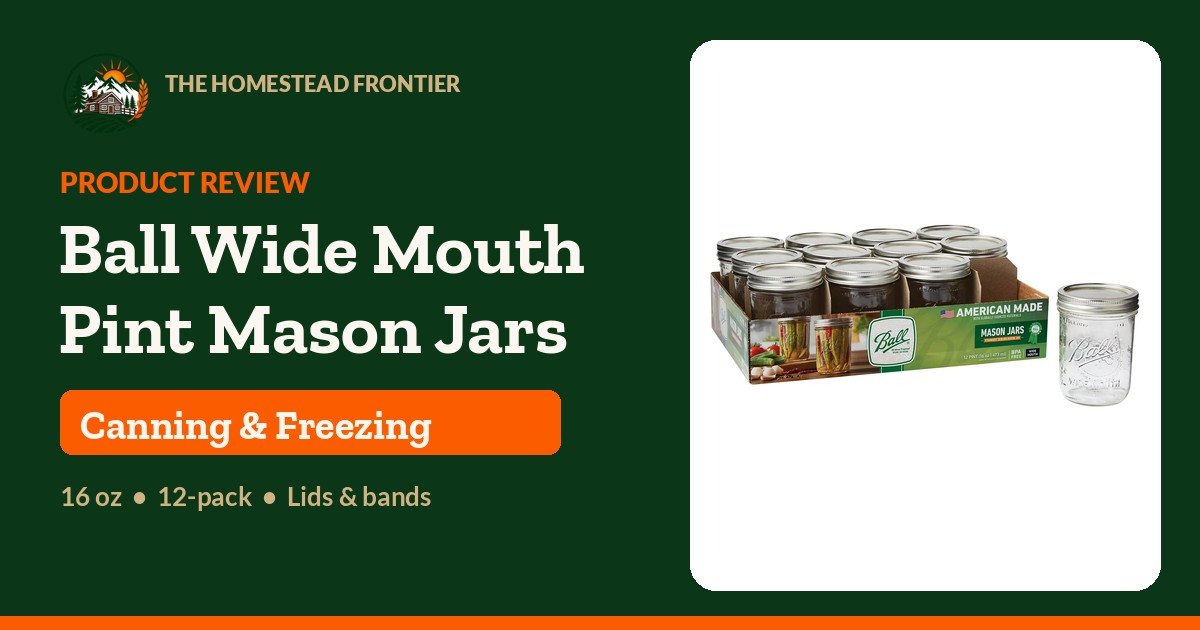
Each case includes twelve 16 oz (pint) wide mouth glass jars with silver metal lids and bands. Ball describes them as versatile jars for canning and crafting, suited to salsas, syrups, sauces, fruits and vegetables, as well as serving, decor and gifts.
- Capacity: 16 oz / 1 pint (473 ml)
- Mouth: wide, takes standard wide-mouth lids, bands and accessories
- Pack: 12 jars with lids and bands
- BPA-free, dishwasher safe, freezer safe, leak proof: all listed in Ball’s spec table
- Where it’s made: Ball’s spec table lists “Made in: USA”. The current case reads “American made with globally sourced materials.”
- Model: 66000ZFP
Why the Wide Mouth Pint Works So Well
The roomy wide mouth makes it much easier to pack chunky foods like dill pickle spears, tomato sauce, sliced fruit or garden salsa, and easier to get a brush or your hand inside for cleaning. Ball recommends wide mouth jars for easier filling and for whole fruits and vegetables. Its jar guide lists the wide mouth 16 oz as ideal for salsas, sauces, relishes and fruit butters.
The shape matters too. These pint jars have tapered sides with no narrow shoulder, so they’re convenient to fill and empty without food trapped under a shoulder. That shape is why Ball lists this jar as freezer safe. Not every mason jar is: Ball’s rule is that straight or tapered jars can be used for freezing, but jars with shoulders should not. Ball’s jar guide doesn’t list its regular-mouth pints or its quarts as freezer safe.
Freezing in Mason Jars
- Use a freezer-safe jar. The wide mouth pint is one. Jars with shoulders aren’t.
- Leave ½-inch headspace. Ball says to leave ½ inch when filling freezer-safe jars, to allow for expansion as food freezes. That applies to soups, broth, sauces and berries alike.
- Cool food before freezing and label jars with the contents and date. (That’s our habit, not a Ball instruction.)
Canning Safety: The Jar Is Only Part of It
Jars alone don’t make food safe. Proper technique does. Before you fill a single jar:
- Follow a tested recipe, such as those from the National Center for Home Food Preservation (NCHFP) or current Ball recipes. Use the jar size, headspace and processing time the recipe gives, and adjust for your altitude.
- Match the method to the food. High-acid and properly acidified foods (jams, jellies, pickles, acidified tomatoes and salsas) can go in a boiling water canner. Low-acid foods like vegetables, meats and broth need a pressure canner. Ball says there’s no safe way to convert a pressure-canning recipe to a water bath.
- Inspect every jar for nicks, chips or cracks before you use it, and wash jars before use (Ball).
- Heat jars before adding hot food, and don’t set hot jars down on a cold, hard surface. Use a jar lifter (Ball).
Lids and Bands: Single-Use vs. Reusable
The included two-piece closures create an airtight seal while canning, according to Ball. Follow Ball’s current lid instructions:
- Canning lids are single use. Ball says lids are for one-time use only when canning, because of the sealing material. Use a new lid for every canning batch.
- Bands are reusable. Ball says bands should turn easily on the jar with no warping or corrosion. Reuse the ones that pass that check.
- Prep: Ball says to wash lids in hot, soapy water, rinse well and set them aside until you need them.
- Used lids can still go to crafting, freezing or dry storage (Ball FAQ). Just don’t reuse them for canning.
Beyond Canning: Pantry Storage
The pints are just as handy for dry pantry staples like beans, rice and dehydrated herbs. If you have a vacuum sealer with a wide-mouth jar attachment, these jars pair well with it for dry goods. Keep in mind that vacuum-sealing a jar is storage, not canning. It doesn’t make moist or low-acid food shelf stable.
For your finished preserves, Ball says canned food keeps best stored between 50°F and 70°F, and shouldn’t be stored where it could freeze, since freezing can break the seal. A cool root cellar or basement shelf is ideal.
Honest Limitations
- Glass is glass. Jars can arrive chipped or break from thermal shock. Some retail reviews mention broken jars or dented lids in shipping. Check every jar when the case arrives.
- Lids are a consumable. Budget for new lids every canning season.
- Not microwave or oven safe. Ball says jars shouldn’t be used in the microwave or oven.
- Pint only. Recipes that call for quarts or half-pints have their own processing times, so use the jar size the tested recipe specifies.
- “American made” is qualified. The current case says “American made with globally sourced materials.”
Who They’re For
Anyone who cans, freezes or stores food in jars: first-time water-bath canners making salsa and pickles, pressure canners putting up pints of vegetables with tested recipes, and anyone who wants freezer-safe glass for broth and berries. If you only ever pour jams and sauces, regular-mouth jars work too, but the wide mouth pint is the more versatile all-rounder.
The Bottom Line
Ball’s wide mouth pints are a simple, dependable foundation for a home-canning kitchen. You get twelve 16 oz jars with lids and bands, a wide mouth that’s easy to fill and clean, and a tapered shape that Ball rates freezer safe. Pair them with tested recipes, new lids for every canning batch, and ½-inch headspace in the freezer.
Prefer to watch or listen? More practical homestead tips are on our YouTube channel — short, useful, no fluff.
Get Weekly Homestead Know-How That Actually Works
Practical tips on gardening, food preservation, DIY repairs and self-reliance, straight to your inbox. Free, no fluff.
Free. Unsubscribe anytime. We never share your email.