Build a Greenhouse to Extend Your Growing Season (From Cold Frames to Hoop Houses)
This page explains how to build different types of greenhouses, like cold frames and hoop houses, to extend your growing season. It offers tips on choosing the right structure, the best location, and how to heat and ventilate the greenhouse. Use the guide to grow more food even in colder months and get the free checklist for gardening tips.
Just when the garden hits its stride, the first frost arrives and it’s over. Or is it? With a little protection from the cold, many homesteaders harvest greens into December, start seedlings in February, and pick tomatoes weeks earlier than their neighbors. That’s the magic of season extension.
A greenhouse doesn’t have to be a glass palace. It can be a simple cold frame made from an old window, a low tunnel over a raised bed, or a hoop house you build over a couple of weekends. Here’s how to choose and build the right one for your homestead.
Key Takeaways
- Start with the simplest structure that meets your goals. Cold frames and low tunnels are cheap and effective.
- Sunlight, especially low winter sun from the south, matters more than anything else when choosing a site.
- Ventilation is essential even in winter. Greenhouses overheat fast on sunny days.
- Plan for wind and snow loads, and check local rules for larger structures.
Why Extend Your Season?
- More food from the same space. Fall and winter greens, early spring crops and longer tomato harvests.
- Seed starting. A protected space to raise healthy transplants without crowding the house.
- Growing crops that struggle outdoors in your climate, like peppers and melons in the north.
- A pleasant place to work on a cold, bright day. Honestly, that’s a big one.
Choose the Right Structure
Cold frames
A bottomless box with a clear, slanted lid, often made from an old window, sitting right on the soil. Perfect for lettuce, spinach and hardening off seedlings. Cheap, simple and a great first project.
Low tunnels
Hoops of PVC, metal conduit or heavy wire over a garden bed, covered with frost cloth or greenhouse film. They fit neatly over a raised bed. If you built one with our raised garden bed guide, a low tunnel is a natural add-on.
Hoop houses (high tunnels)
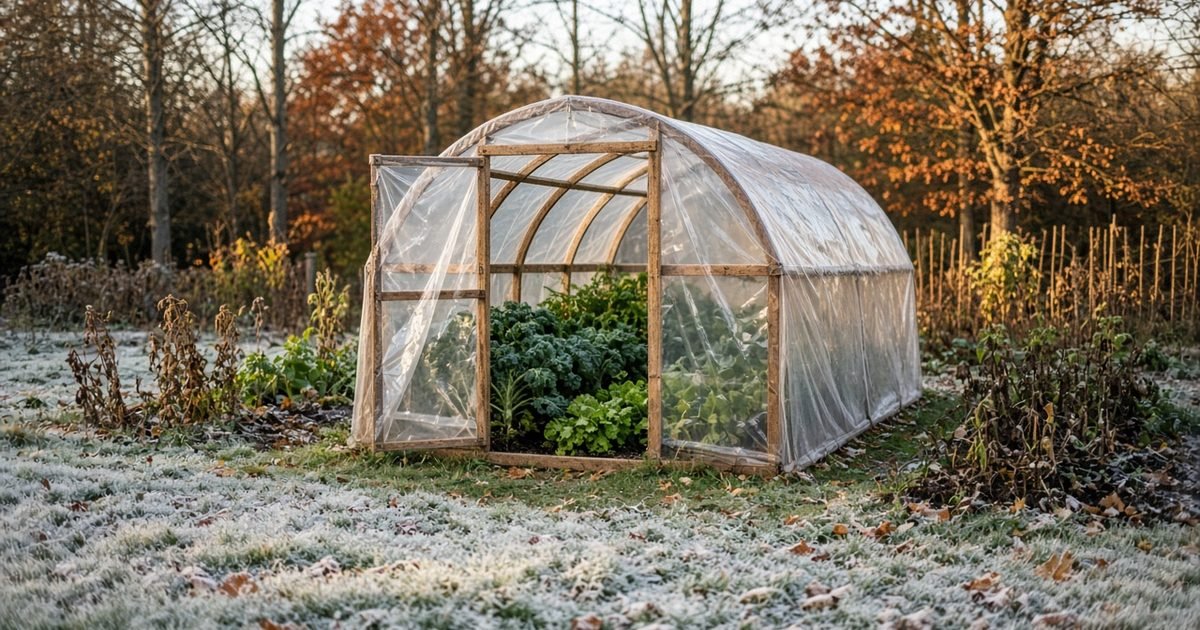
Walk-in structures of bent metal or PVC hoops covered in greenhouse-grade polyethylene film. They offer lots of growing space for the money, and they’re the workhorse of many small farms.
Framed greenhouses
Wood or metal frames with polycarbonate panels or glass. They’re more permanent and better insulated, and they cost more. Kits range widely in price, so compare options and look for secondhand structures in your area.
Pick the Best Location
- Maximize sun. Look for a spot with full sun, especially from the south in winter, when the sun sits low. Watch for shadows from buildings and trees in November, not just in June.
- Orientation. In most of the country, running the long side east to west captures the most winter light.
- Level, well-drained ground. Avoid low spots where cold air and water collect.
- Wind protection. A windbreak on the north or prevailing-wind side reduces heat loss and storm damage.
- Easy access to water, and to power if you’ll run fans or heat mats.
Materials and Construction Basics
- Frame. Galvanized steel is durable and handles snow well. PVC is cheap and easy, but it can sag and weaken in UV and cold. Rot-resistant wood looks great and is easy to work. If you use treated lumber, keep it out of contact with growing soil.
- Covering (glazing). Greenhouse-grade polyethylene film is inexpensive and typically lasts about four years. Twin-wall polycarbonate insulates better and lasts ten years or more. Glass gives the best light but is heavy, fragile and a poor insulator.
- Foundation and anchoring. Gravel, pavers or a timber base with ground stakes or anchors. Wind can lift a light greenhouse like a kite, so anchor it seriously.
- Snow load. In snowy areas, choose a steep or gothic-arch roof so snow slides off, space hoops closer together, and brush off heavy snow promptly.
- Permits. Small hobby greenhouses often don’t need a permit, but larger or permanent structures may. Check with your county before you build.
Keep It Comfortable Inside
Ventilation
On a sunny day, even in January, an unvented greenhouse can climb past 90°F. Use roll-up sides, end-wall doors, roof vents or automatic vent openers that need no electricity. A small fan keeps air moving and helps prevent mildew.
Heat without breaking the bank
- Thermal mass. Barrels of water painted dark, or stone and brick, soak up heat by day and release it at night.
- Row covers inside. A layer of frost cloth over crops inside the greenhouse adds several degrees of protection.
- Supplemental heat, carefully. Heat mats for seedlings work well. Any propane, wood or electric heater must be rated for greenhouse use, installed safely and vented properly. Fire and carbon monoxide are real risks in enclosed spaces.
Watering
Drip irrigation or soaker hoses deliver water efficiently. In winter, water in the morning so foliage dries before the cold night. Collecting rainwater from the greenhouse roof into a barrel is a nice homestead touch.
What to Grow in a Fall and Winter Greenhouse
- Spinach, kale, lettuce, mâche, Swiss chard and Asian greens
- Scallions, radishes and carrots
- Herbs like parsley, cilantro and chives
- Starts for early spring: onions, brassicas and perennial herbs
Rotate crops and refresh the soil with compost every season to keep disease and pests down.
Frequently Asked Questions
What’s the cheapest way to extend my growing season?
A cold frame from an old window, or a low tunnel with PVC hoops and frost cloth over an existing bed. Either can be built in an afternoon for modest cost.
Do I need to heat my greenhouse in winter?
Not necessarily. Many cold-hardy greens survive in an unheated hoop house, especially with an inner row cover. Heat is mainly needed if you want warm-season crops or heavy winter production.
How long does greenhouse plastic last?
Greenhouse-grade polyethylene film is usually rated for about four years. Ordinary hardware-store plastic breaks down much faster in sunlight.
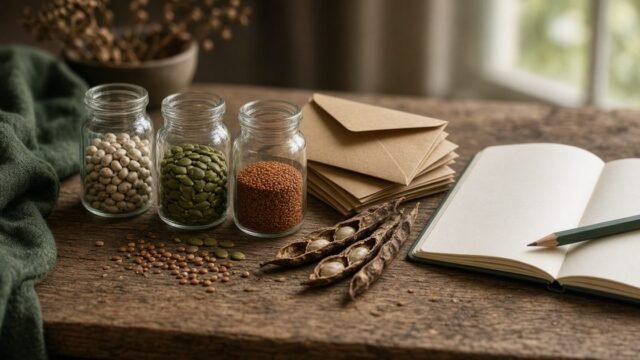
Pair your new greenhouse with a home seed supply. Our guide on how to start your own seed bank shows you how to save seeds from this year’s best plants for next spring.
Get a printable greenhouse checklist in our free Garden, Water & Energy pack, available in our Free Downloads library.
Prefer to watch or listen? More practical homestead tips are on our YouTube channel — short, useful, no fluff. Subscribe on YouTube → The Homestead Frontier
Get Weekly Homestead Know-How That Actually Works
Practical tips on gardening, food preservation, DIY repairs and self-reliance, straight to your inbox. Free, no fluff.
Free. Unsubscribe anytime. We never share your email.