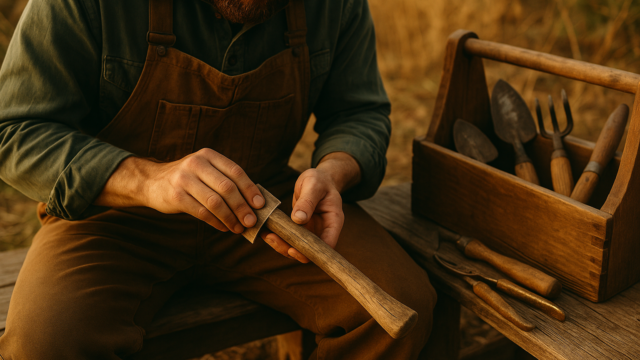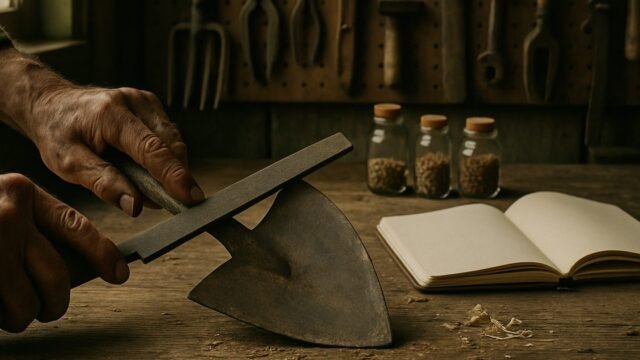
Sharpening and Caring for Your Axe and Splitting Maul
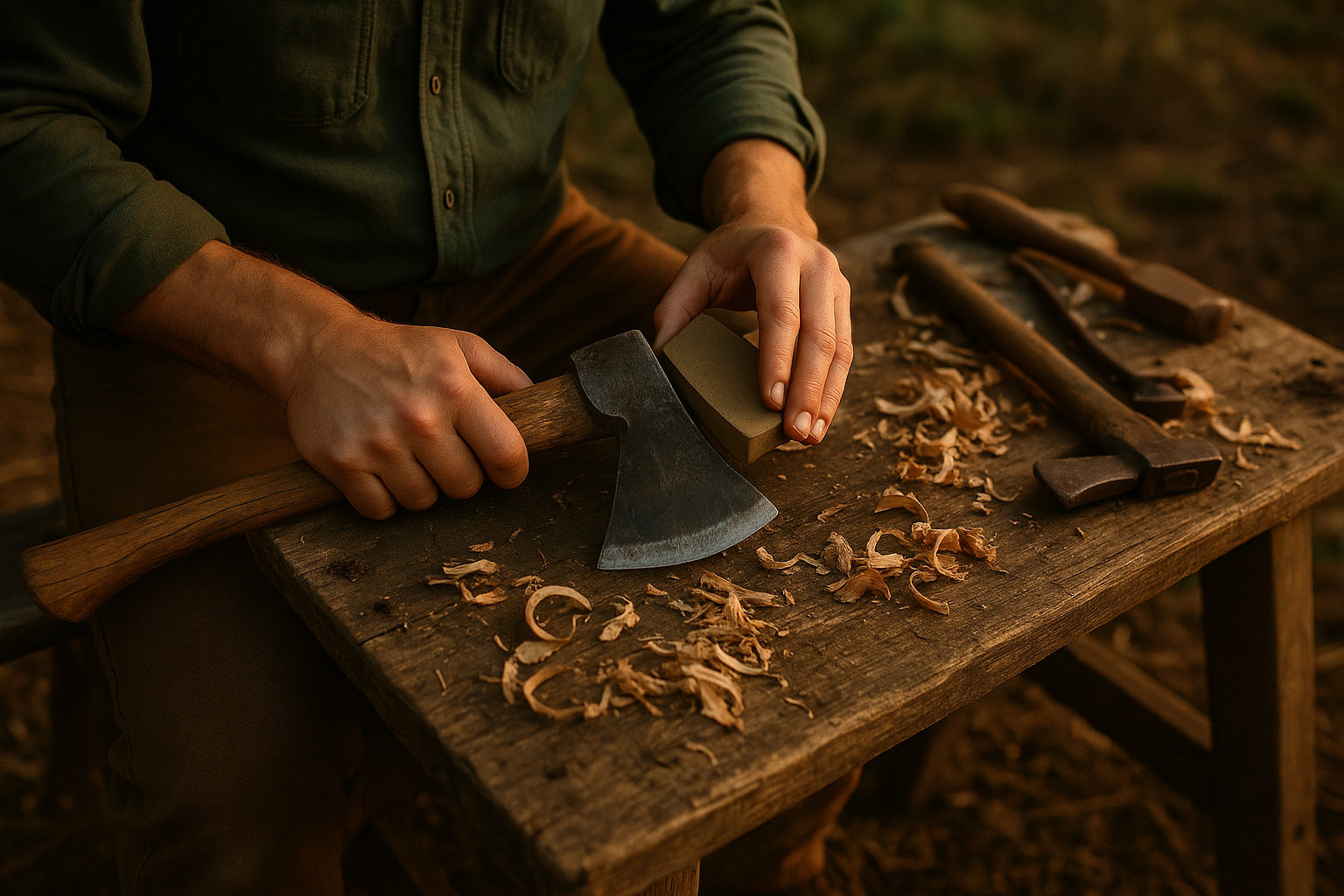
This page is about how to sharpen and care for your axe and splitting maul. You can learn proper techniques to keep your tools sharp and safe and find tips on maintaining and storing them to ensure they last longer.
An axe and splitting maul are vital tools in any homesteader’s arsenal, as they handle everything from chopping kindling to splitting large logs for winter firewood. By learning to sharpen and care for these tools properly, you can ensure they remain reliable and effective season after season.
Key Takeaways
- Sharpening your axe regularly improves efficiency and safety by ensuring smooth, clean cuts.
- Using the right tools, such as a file and a whetstone, helps maintain the edge without damaging the blade.
- Proper storage and rust prevention methods prolong the life of both your axe and splitting maul.
- Regular maintenance, including handle inspection and replacement, ensures your tools are safe to use.
The Basics of Blade Sharpening
Picture this: You’ve just harvested a large tree, and the logs are ready to be split. You grab your trusty axe, but as you swing, it feels dull and cumbersome, making the job harder than it should be. A sharp blade is crucial for effective wood splitting, and achieving this begins with understanding the right sharpening techniques.
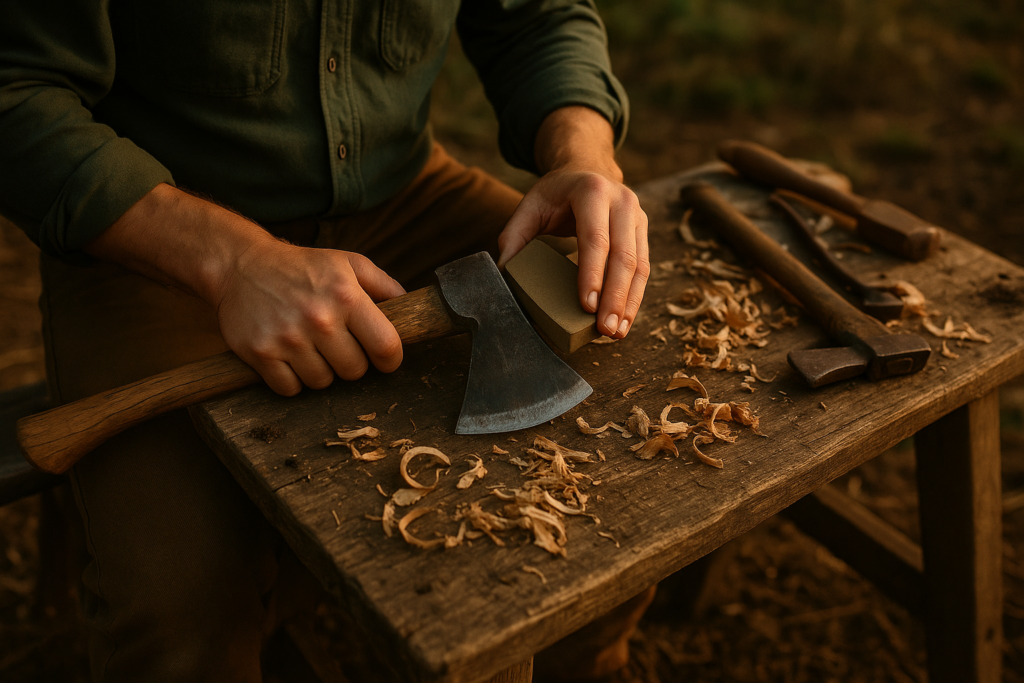
Start by securing your axe in a vice, with the blade facing upwards. Using a flat, single-cut mill file, work the edge at a consistent angle—approximately 20 degrees is standard for most axes. Begin with long, even strokes, removing nicks and creating a smooth, bevelled edge. Once satisfied with the shape, transition to a whetstone for finer sharpening. Wet the stone with water or oil, and gently slide it along the blade’s edge in a circular motion. This hones the blade, providing a razor-sharp finish that will handle even the toughest wood.
Care Tips for Your Axe and Splitting Maul
Beyond sharpening, caring for your axe and maul involves regular inspections and maintenance. After sharpening, clean the blade thoroughly to remove filings or metal dust. Applying a thin coat of oil, such as linseed oil, prevents rust, especially if you store your tools in a damp environment. A sharpened and well-oiled blade cuts more efficiently, reducing the effort needed for each swing.
Wooden handles require attention too. Look out for cracks or splinters, which compromise the tool’s integrity and can lead to accidents. Sanding the handle smooth and applying a coat of protective oil will help keep it strong and comfortable in hand. Should you notice significant damage, replacing the handle is wise—a sound handle is crucial for safe use.
Proper Storage and Protection
Proper storage is key to maintaining your tools’ longevity. Store axes and mauls indoors, away from moisture that can cause rust or wood decay. A wall-mounted rack in a dry shed or garage works well, keeping the blades off the ground and the tool easily accessible. Protective sheaths or blade covers safeguard the edge and prevent accidental injuries when reaching for tools.
If your homestead is prone to rust-inducing conditions, consider applying a rust preventative spray after each use and before storage. This step forms a protective barrier against rust, ensuring your tool remains in great shape for the next season.
Safety Precautions and Tool Handling
With sharp tools come safety considerations. Always use proper form when swinging an axe or maul, standing with feet shoulder-width apart and focusing on controlled movements. Ensure the area around you is clear of people, pets, and obstacles before commencing work. Wearing protective gear, such as gloves and eye protection, adds an extra layer of safety.
Routine checks for tool integrity are critical. Prior to each use, inspect the blade for sharpness and the handle for cracks. These simple precautions prevent potential hazards and extend the life of your tools.
Frequently Asked Questions
How often should I sharpen my axe?
Frequency depends on usage, but a good rule of thumb is to sharpen your axe when you notice it not cutting efficiently. For regular wood splitting, sharpening once every month or two should suffice.
What should I use to oil the axe head?
Saturated oils like linseed oil are effective for protecting the axe head from rust. Apply a light coat after use and before storage, especially in humid environments.
How do I know when to replace the handle?
Inspect the handle regularly for signs of wear such as cracks or splinters. If the handle feels loose or compromised, it’s best to replace it to ensure safe handling.
Can I sharpen a splitting maul in the same way as an axe?
Yes, sharpening a splitting maul uses similar techniques, though its thicker blade requires less frequent sharpening. Focus on maintaining its factory edge shape for optimal performance.
Caring for your axe and splitting maul is an investment in your homestead’s efficiency and safety. With the right techniques and regular maintenance, you’ll be ready to tackle any wood pile that stands in your way. Subscribe on YouTube → The Homestead Frontier for more practical homesteading tips and advice.
Get Weekly Homestead Know-How That Actually Works
Practical tips on gardening, food preservation, DIY repairs and self-reliance, straight to your inbox. Free, no fluff.
Free. Unsubscribe anytime. We never share your email.