No Land, Little Money? How to Start Homesteading Anyway
Learn how to start homesteading even if you don't have land or much money. This page offers tips on practicing homesteading skills like cooking, preserving food, and growing plants in small spaces. You can also find ways to gain experience with animals and learn how to save for future land.
A lot of homestead dreams stall on one sentence: “Someday, when we have land.” The trouble with someday is that it never arrives on its own. Meanwhile, the skills that make a homestead work, like growing, cooking, preserving, mending and caring for animals, can be practiced almost anywhere and for very little cash.
So let’s swap the question “How much land do I own?” for a more useful one: “What can I reach?” A kitchen, a sunny window, a neighbor’s unused corner, a library card and a few spare hours a week add up to more homestead than most people expect.
Key Takeaways
- Think in terms of access, not ownership. Borrowed ground and shared tools count.
- A quick inventory of your time, space, money and people shows you where to start.
- Your kitchen is a homestead classroom, and it’s already paid for.
- Hands-on experience with animals and big gardens can be borrowed before it’s bought.
- A small, automatic land fund keeps the bigger dream moving while you learn.
Take a 15-Minute Homestead Inventory
Grab a notebook and answer five questions honestly:
- Time. How many hours a week can you give this? Two hours is a real start.
- Light. Where does direct sun land in your home, and for how long? A window, balcony or step with about six hours of sun can grow food.
- Storage. Where could a few shelves of jars, a bin of potatoes or a bag of flour live?
- Money. What can you set aside each month without strain? Even $20 gives you something to work with.
- People. Who do you know with a yard, a garden, a flock or a skill you’d like to learn?
That last question often turns out to be the most valuable. Write down every name. Plenty of people with a big garden would love an extra pair of hands in August, and they’ll teach you a lot while you help.
Turn Your Kitchen Into a Classroom
You don’t need a square foot of soil to build the core skills. Rotate through a few of these over the next few months:
- Bake bread weekly. Flour, water, salt and yeast cost little, and you’ll learn to read dough the way a gardener learns to read soil.
- Cook dried beans and whole grains. They cost a fraction of canned or ready-made versions and keep well on the shelf.
- Make yogurt. Start with pasteurized milk, a pot, a thermometer and a warm spot.
- Put food by. Buy a case of in-season produce and learn water bath canning with jam, pickles or acidified tomatoes. Stick to tested recipes from the National Center for Home Food Preservation or the USDA, and see our water bath canning basics guide for the steps.
- Dry herbs and fruit. Hang herb bundles somewhere warm with good airflow and no harsh sunlight, and dry apple rings in a barely warm oven with the door propped open.
Each of these saves money while you learn, which is exactly what a tight budget needs.
Grow Food on Ground You Don’t Own
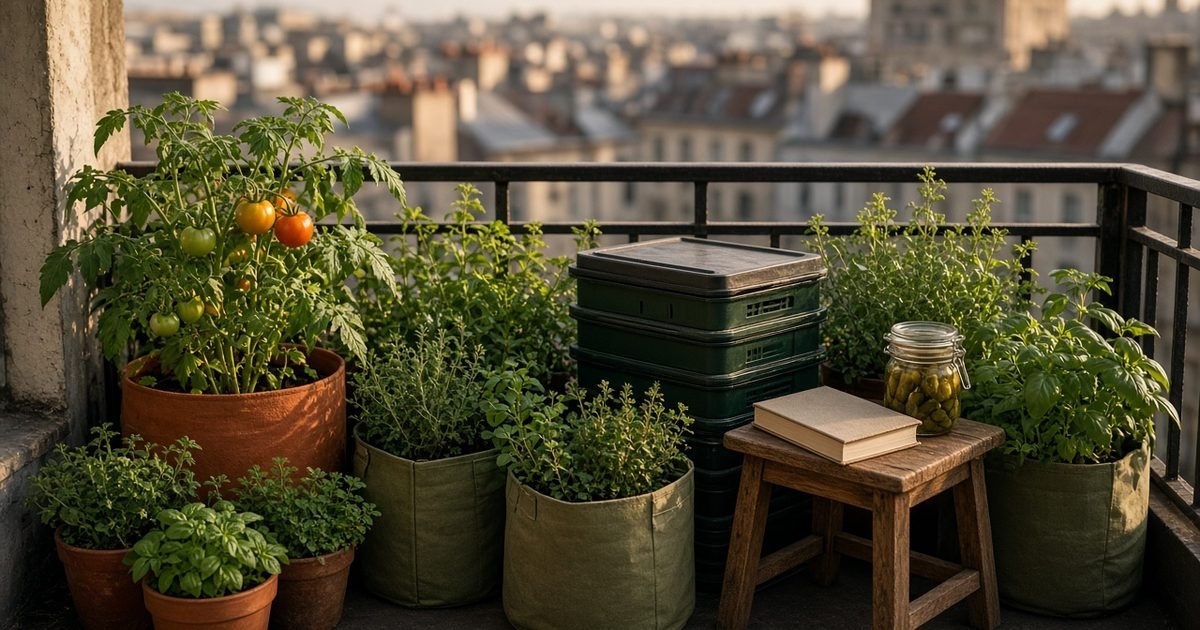
Pots on a balcony are a fine beginning, but borrowed ground lets you try sprawling crops like squash, corn and potatoes.
- Community garden plots often rent for a modest yearly fee, and the gardeners in the next plots become free teachers.
- Yard-sharing pairs people who have unused space with people who want to grow. Offer the owner a share of the harvest.
- Ask your landlord if you rent a house. Get permission in writing, and agree on where beds can go and what happens when you move out.
- Churches, schools and nonprofits sometimes have garden space that needs volunteers.
In older city neighborhoods, ask about a soil test before you plant vegetables in the ground, since lead from old paint can linger in yards. The extension service in your county can walk you through sampling. If the numbers come back high, switch to raised beds or pots of fresh, clean soil.
Borrow Animal and Farm Experience
Before you spend a dollar on livestock, find out what the daily work feels like.
- Farm-sit or pet-sit for friends with chickens, rabbits or goats. A long weekend of morning and evening chores teaches more than a month of reading.
- Volunteer at a local farm, a 4-H club, a county fair barn or a community orchard.
- Help at harvest time. Many small growers welcome help picking or processing in exchange for produce.
Keep notes on what you enjoy and what wears you out. That list will shape the homestead you eventually build.
Spend Little, and Spend It in the Right Order
When money is tight, the order you buy things matters. A good rule is to buy only what you’ll use this month. That might mean seed packets, potting mix and a few containers first, then canning jars (secondhand is fine, but always use new flat lids), then sturdy gloves and a hand trowel. Big items like a pressure canner, a chest freezer or a tiller can wait until your harvests call for them, and many can be borrowed or found used.
Check the library before buying books or tools. Many libraries now lend seeds, kitchen gadgets and even garden tools alongside the usual shelves.
Keep the Land Dream Moving
If owning land is part of your plan, give it a steady, boring system:
- Open a separate savings account labeled “homestead” and set up an automatic transfer on payday.
- Once a month, browse land listings in one area you’re considering, and note prices, water sources and road access.
- Budget for the extras that surprise first-time buyers, like a well, septic system, driveway, power hookup and fencing.
Our guide to common homesteading mistakes covers more of the land-buying traps to watch for.
Frequently Asked Questions
Is it possible to homestead without owning land?
Yes. Homesteading is a set of skills and habits more than a type of property. Cooking, preserving, growing in containers or borrowed plots, and mending all count, and they prepare you for land later.
Which skill pays off fastest on a small budget?
Bake bread and cook from scratch. The ingredients are inexpensive, and the savings begin with the first meal.
Where can I practice animal care before owning livestock?
Offer to cover chores for friends who keep a flock, or volunteer with a 4-H club or a nearby farm. You’ll learn the daily rhythm before you commit.
You don’t have to wait for a deed to start living this way. Begin with what you can reach today, and let the skills pile up. For more small first steps, see our list of simple things you can start today, and when you’re ready to fill some shelves, read our guide to stocking a homestead pantry.
Start building skills today with our free Off-Grid Homesteader Quick-Start Guide and 50 printable checklists in our Free Downloads library.
Prefer to watch or listen? More practical homestead tips are on our YouTube channel — short, useful, no fluff. Subscribe on YouTube → The Homestead Frontier
Get Weekly Homestead Know-How That Actually Works
Practical tips on gardening, food preservation, DIY repairs and self-reliance, straight to your inbox. Free, no fluff.
Free. Unsubscribe anytime. We never share your email.