What Is Homesteading? A Plain-Spoken Guide to the Modern Homestead Life
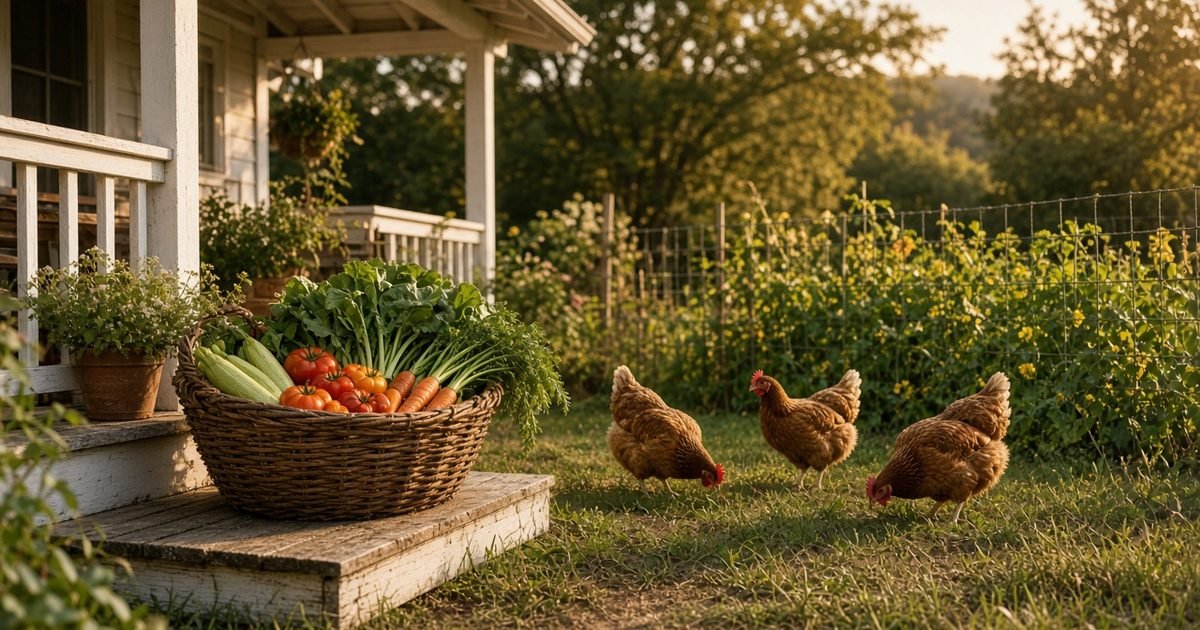
This page explains what modern homesteading is and how you can start it in your own life. It emphasizes self-reliance by growing food, making home repairs, and learning new skills. You can try a small project like gardening or canning to see if it's right for you.
Ask ten homesteaders what homesteading means and you’ll get ten answers, usually over a cup of coffee and with dirt still under their fingernails. For some it’s forty acres, a milk cow and a woodstove. For others it’s six tomato plants on an apartment balcony and a shelf of jam in the pantry. Both count. That’s the first thing we want you to know.
At The Homestead Frontier, we think of homesteading as a direction, not a destination. It means doing a little more for yourself each season: growing some of your food, putting some of it by, fixing what breaks, and leaning less on the grocery store and the repair shop. Where you start matters a lot less than the fact that you start.
Key Takeaways
- Homesteading is a mindset of self-reliance, not a minimum acreage.
- The word comes from the Homestead Act of 1862, but today’s homesteaders are building skills more than claiming land.
- Most people land somewhere on a spectrum, from apartment homesteader to full rural smallholding.
- The best way to find out if it suits you is to try one small project this season.
Where the Word Comes From
The term goes back to the Homestead Act of 1862. The federal government offered up to 160 acres of public land to settlers who would live on it, build a home and farm it for five years. Millions of acres changed hands that way, mostly across the Great Plains and the West. It wasn’t an easy bargain. Plenty of families gave up before the five years were out.
That program is long gone. Congress ended homesteading on federal land in 1976, with a ten-year extension for Alaska that ran out in 1986. So if you’ve seen claims online about “free government land” for homesteaders, be skeptical. A few small towns do offer incentives to new residents, but they come with conditions and they’re a far cry from the old land grants.
What Homesteading Means Today
Modern homesteading is less about claiming land and more about reclaiming skills. A modern homesteader might:
- Grow a vegetable garden, whether in raised beds, containers or a backyard plot.
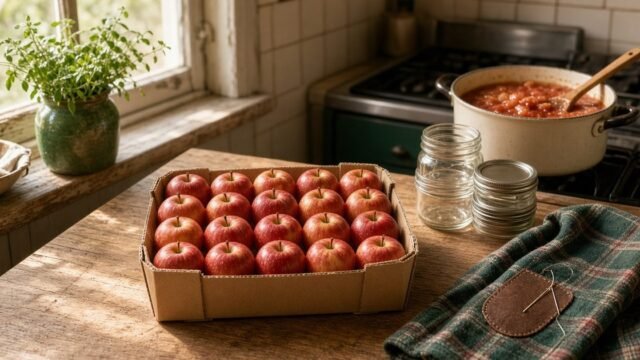
- Preserve the harvest by canning, freezing, dehydrating or storing it in a cool cellar.
- Keep a few laying hens, and maybe bees, goats or rabbits later on.
- Cook from scratch and bake bread.
- Handle basic repairs, carpentry and equipment maintenance.
- Heat with wood, collect rainwater or add a bit of solar.
- Trade, barter and share with neighbors.
You don’t have to do all of it. Most of us pick two or three things that fit our space, schedule and budget, then add more as confidence grows.
The Homesteading Spectrum
It helps to see homesteading as a sliding scale rather than an all-or-nothing leap.
The apartment or town homesteader
Container herbs on a windowsill, a community garden plot, a pantry stocked with home-canned salsa, and a sewing kit that actually gets used. This is where a lot of great homesteaders begin.
The backyard homesteader
A suburban lot with raised beds, a compost bin, a small flock of hens (where local rules allow) and a rain barrel. If you want a head start here, our guide to building a simple raised garden bed is a good weekend project.
The rural smallholder
A few acres or more, with room for livestock, an orchard, a big garden, firewood and outbuildings. More freedom, and a lot more chores.
Why People Are Choosing This Life
Folks come to homesteading for all kinds of reasons. Here are the ones we hear most often:
- Knowing where your food comes from. There’s real satisfaction in a supper where you grew the beans and gathered the eggs.
- Resilience. A stocked pantry and a few practical skills make a power outage, a job change or a price spike easier to ride out.
- Family time. Kids who help plant, harvest and care for animals learn patience and responsibility, and they tend to remember it. Programs like 4-H give young people a structured way to raise an animal or take on a project and show it at the county fair.
- Saving money over time. Not every project pays for itself right away, but a productive garden, home cooking and doing your own repairs add up.
- A slower pace. Many people simply want days shaped by seasons instead of screens.
The Honest Side of Homesteading
We’d be doing you no favors if we painted it all as sunshine and fresh bread. Homesteading is work. Animals need care every single day, including holidays and the coldest mornings of January. Gardens fail. Weather doesn’t care about your plans. Our ancestors worked from dawn to dark because they had to. Today we have the luxury of choosing how much to take on, and choosing wisely is half the battle.
That’s why we always say start small. One well-kept garden bed beats a half-acre gone to weeds. You’ll find that advice in our Audio Tips too, because it’s the lesson almost every homesteader learns the hard way.
How to Take Your First Step
If you’re curious but not sure where to begin, pick just one of these for the rest of this season:
- Plant a pot of garlic or a few fall greens.
- Put up one batch of something. Our beginner’s guide to water bath canning walks you through it.
- Start a compost pile with kitchen scraps and fall leaves.
- Learn one repair skill, like fixing a leaky faucet or sharpening a hoe.
- Start a homestead notebook and jot down what you want your life to look like in three years.
Frequently Asked Questions
Do I need land to be a homesteader?
No. Land opens up options, but many skills, like cooking from scratch, preserving food, mending and container gardening, work anywhere.
Is homesteading the same as farming?
Not quite. Farming usually means producing crops or livestock to sell. Homesteading focuses on providing for your own household first, though many homesteaders sell a little surplus.
How much does it cost to start?
It can cost very little. A few seed packets, a compost pile and some canning jars will get you going. Big expenses like land, fencing and livestock can wait until you know what you enjoy.
Wherever you are on the spectrum, welcome. If you’re new here, start with our welcome post, then pull up a chair. We’ll be sharing practical, down-to-earth guides every weekday.
New here? Grab our free Survival Homestead Starter Guide and 50 printable homestead checklists in our Free Downloads library.
Prefer to watch or listen? More practical homestead tips are on our YouTube channel — short, useful, no fluff. Subscribe on YouTube → The Homestead Frontier
Get Weekly Homestead Know-How That Actually Works
Practical tips on gardening, food preservation, DIY repairs and self-reliance, straight to your inbox. Free, no fluff.
Free. Unsubscribe anytime. We never share your email.