Stocking a Homestead Pantry: A Practical Guide to Eating Well All Winter
This page is a guide to setting up a well-stocked pantry for winter. It offers practical tips on storing food you'll actually use, organizing with "first in, first out," and keeping your pantry items in good condition. You can learn how to start small and gradually build up your food supplies for comfort and security.
Few things make a homesteader feel as calm as a full pantry. When the first snowstorm closes the roads, or money is tight for a month, or unexpected company shows up for supper, a well-stocked pantry quietly takes care of it. It’s not about hoarding. It’s about having what you need on hand so you can cook good meals without running to town.
Here’s how we think about building a homestead pantry that you’ll actually use, not one full of forgotten cans.
Key Takeaways
- Store what you eat, and eat what you store.
- Rotate with “first in, first out” so nothing expires on the shelf.
- Keep dry goods in airtight containers in a cool, dark, dry place.
- Don’t forget water, a backup way to cook, and non-food essentials.
Start With What Your Family Eats
The biggest pantry mistake is buying a pile of foods nobody likes. Instead, write down ten meals your family eats regularly, like chili, spaghetti, pancakes, soup and bread, or rice and beans. Then list the shelf-stable ingredients for each. That list becomes the backbone of your pantry.
A good approach is to aim for one extra week of those ingredients, then two weeks, then a month. Growing it gradually keeps the cost manageable.
Pantry Staples Worth Keeping
Grains and baking
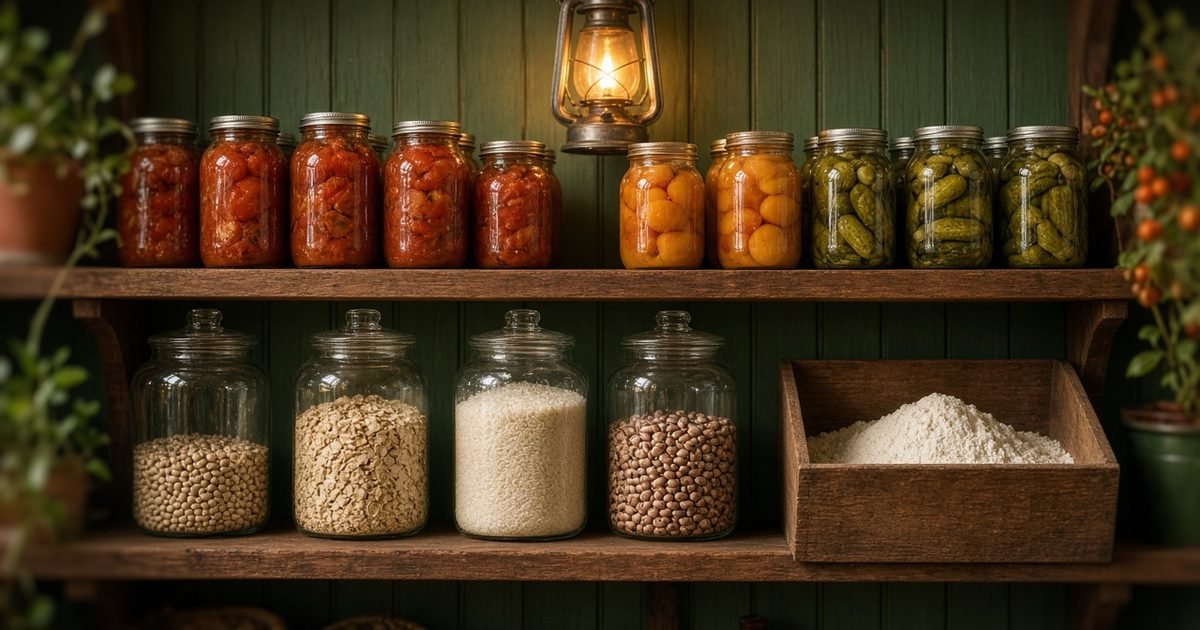
- Flour (all-purpose and whole wheat), cornmeal and oats
- Rice (white keeps much longer than brown) and pasta
- Baking powder, baking soda, yeast, salt and vanilla
- Sugar, honey and maple syrup
Proteins
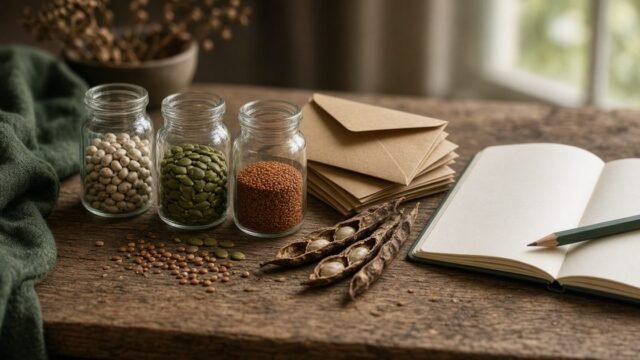
- Dry beans and lentils, the backbone of a thrifty pantry
- Canned or home-canned meat, chicken and fish
- Peanut butter and other nut butters
- Powdered milk for baking and cooking
Fruits and vegetables
- Home-canned tomatoes, sauces, pickles, jams and fruit
- Commercially canned vegetables and soups
- Dried fruit like raisins and apricots, plus dehydrated garden produce
- Root vegetables from the cellar. Our post on how to build a root cellar covers storing potatoes, carrots and apples.
Flavor and fats
- Cooking oils: olive, vegetable and a solid fat like lard or coconut oil (oils go rancid, so buy what you’ll use within a year)
- Herbs and spices, including dried herbs from your garden
- Vinegar, broth, bouillon and condiments
- Coffee, tea and cocoa, because morale matters
Put Up Your Own
Home-canned food is the soul of a homestead pantry. Tomatoes, salsa, applesauce, pickles and jam are great high-acid starter projects for a water bath canner. If you’re new to canning, begin with our water bath canning basics guide. Low-acid foods like green beans, meats and soups need a pressure canner.
A few safety notes:
- Always use tested recipes from sources like the USDA or the National Center for Home Food Preservation.
- Store jars with the rings removed, so a failed seal is easy to spot.
- For best quality, use home-canned food within about a year.
- Never taste food from a jar with a bulging lid, leaks, spurting liquid or an off smell. When in doubt, throw it out.
Store It Right
Heat, light, moisture and pests are the pantry’s enemies.
- Keep it cool and dark. A steady 50–70°F is ideal. Avoid spots near the stove, furnace or a sunny window.
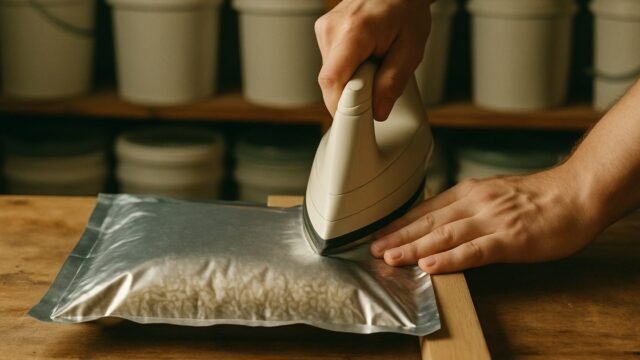
- Use airtight containers. Food-grade buckets with gasket lids, glass jars or heavy plastic bins keep out moisture and pantry moths. For long-term bulk storage, mylar bags with oxygen absorbers inside buckets work well for dry grains and beans.
- Keep it off the floor. Shelving or pallets keep food away from damp concrete and critters.
- Label everything. Write the contents and the date you packed or bought it right on the container.
Rotate: First In, First Out
Put new purchases at the back and move older items forward. A simple routine keeps everything fresh:
- Keep a written or spreadsheet inventory on the pantry door.
- Once a month, check dates and pull anything that needs using soon into the week’s meal plan.
- As a rough guide, commercially canned high-acid foods like tomatoes and fruit are best within 12–18 months. Low-acid canned goods like vegetables and meat keep quality for 2–5 years if the cans are in good shape.
- Toss cans that are deeply dented on the seams, bulging, leaking or rusted through.
Don’t Forget Water and Backup Cooking
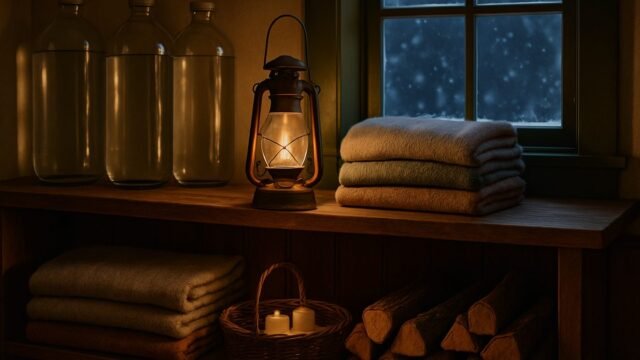
A pantry isn’t much help if you can’t drink or cook. Ready.gov suggests storing at least one gallon of water per person per day for several days, and a two-week supply if you can. Store it in food-grade containers away from sunlight and chemicals, and include water for pets.
Keep a way to cook when the power goes out, too: a camp stove with fuel, a woodstove you can cook on, or an outdoor grill. Only use fuel-burning stoves where they’re designed to be used, and never indoors unless they’re rated for it.
Non-Food Essentials
While you’re at it, stock:
- Toilet paper, soap, toothpaste and other toiletries
- Cleaning supplies and trash bags
- Flashlights, lanterns and batteries
- A basic first aid kit
- Matches and lighters
- Canning lids, since they’re sometimes hard to find at the peak of the season
Frequently Asked Questions
How much food should a homestead pantry hold?
Start with an extra week or two of your regular meals, then build toward a month or more as budget and space allow. Many homesteaders keep enough to get through a full winter.
Where should I put a pantry if my kitchen is small?
A cool closet, the space under a bed, a basement shelf or even a converted linen cupboard can hold a surprising amount. Just keep it dry, dark and away from heat.
How do I keep bugs out of flour and grains?
Store them in airtight containers. Some homesteaders freeze new flour for a few days before storing it to kill any insect eggs.
A great pantry is built one grocery trip and one canning session at a time. Get it ready alongside our fall winterizing checklist, and winter will feel a whole lot cozier.
Get a printable pantry checklist in our free Food, Pantry & Kitchen pack, available in our Free Downloads library.
Prefer to watch or listen? More practical homestead tips are on our YouTube channel — short, useful, no fluff. Subscribe on YouTube → The Homestead Frontier
Get Weekly Homestead Know-How That Actually Works
Practical tips on gardening, food preservation, DIY repairs and self-reliance, straight to your inbox. Free, no fluff.
Free. Unsubscribe anytime. We never share your email.