
Long-Term Food Storage: Buckets, Mylar Bags and What Really Lasts
Learn how to store food long-term to keep it fresh and safe from pests. This page explains how to use buckets, Mylar bags, and oxygen absorbers for storage. Discover which foods store well and get tips on organizing your pantry.
There’s real satisfaction in buying a 50-pound sack of rice for a fraction of the grocery store price. But bulk food is only a bargain if it stays fresh, dry and free of bugs until you’re ready to use it. Our homestead pantry guide covered the everyday working pantry. This post goes a step deeper, into storing staples for years instead of months.
Key Takeaways
- The enemies of stored food are oxygen, moisture, light, heat and pests.
- Food-grade buckets plus mylar bags and oxygen absorbers keep dry staples for years.
- Only low-moisture, low-oil foods are good candidates for long-term storage.
- Label everything and rotate it into your everyday cooking.
What Stores Well (and What Doesn’t)
Excellent long-term candidates, stored properly in cool, dry conditions:
- White rice
- Dried beans and lentils
- Rolled oats
- Wheat berries and other whole grains
- Sugar, honey and salt (they keep essentially indefinitely)
- Dry pasta
- Nonfat powdered milk
Poor long-term candidates:
- Brown rice, whole-wheat flour and whole-grain cornmeal. Their natural oils go rancid within months. Store them in the freezer or buy smaller amounts.
- Nuts, seeds and anything oily.
- Anything that isn’t bone dry. Moist foods sealed without oxygen can create conditions for botulism.
Shelf life depends heavily on storage conditions. Cooler is always better: every drop in temperature slows the decline of flavor and nutrients.
The Gear
- Food-grade buckets. Look for #2 HDPE plastic. Bakeries and delis sometimes give away used food-grade buckets. Just avoid any that held non-food items or strong-smelling pickles.
- Gamma lids. Screw-on lids make it much easier to open the buckets you use regularly.
- Mylar bags. They block light and oxygen. Choose a thickness of 5 mil or more, and size them to fit your buckets.
- Oxygen absorbers. Small packets that remove oxygen from sealed containers. Use them only with dry foods, and not with sugar or salt, which will harden into a brick.
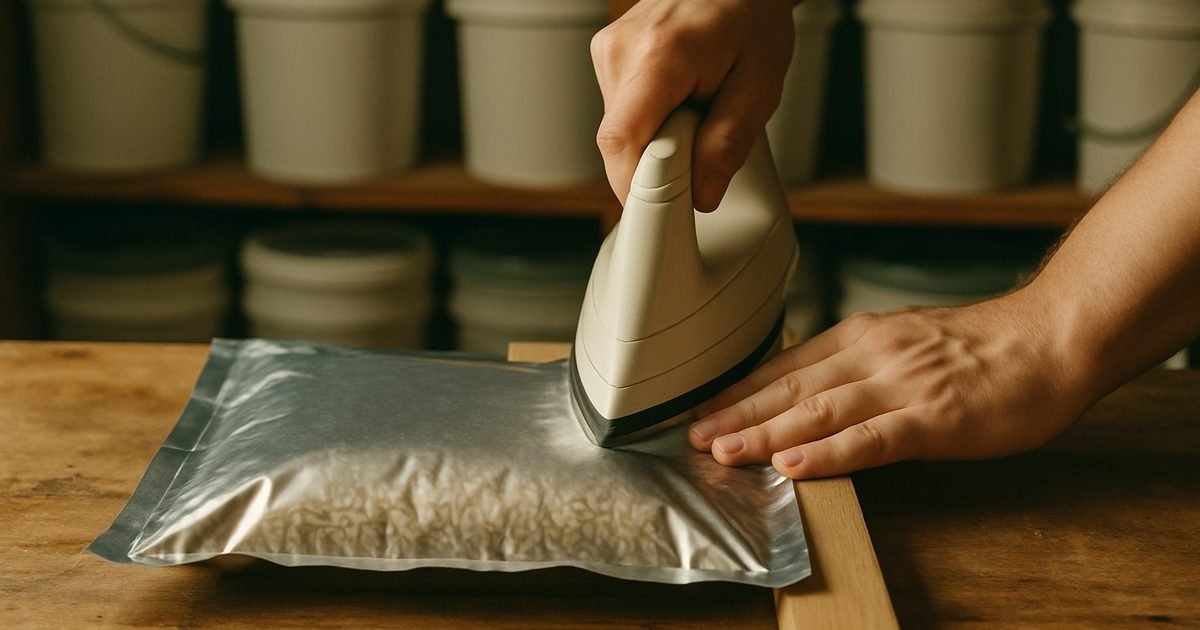
- A heat source to seal the mylar, such as a household clothes iron or a hair straightener.
Step by Step: Packing a Bucket
- Freeze first (optional). Freezing grains for a few days helps kill any insect eggs. Let them warm to room temperature before packing so no condensation forms.
- Line the bucket with a mylar bag.
- Fill the bag, shaking gently to settle the contents and leaving a few inches at the top for sealing.
- Add oxygen absorbers according to the manufacturer’s chart for the size of the bag. Work quickly. Absorbers start working the moment they’re exposed to air, so keep unused ones in a sealed jar.
- Press out the air and seal the bag with the iron across the top.
- Put on the lid and label with the contents and the date.
Within a day or two, a well-sealed bag will pull in tight around the food as the absorbers do their job.
Storing Your Buckets
- Keep them cool, dry and dark. A basement or an interior closet beats a hot garage or attic.
- Set buckets on pallets or shelves, not directly on concrete.
- Don’t stack buckets too high, especially if they’re full of heavy grains.
- Check them every few months for signs of pests, moisture or bulging.
Rotation Is Everything
Long-term storage works best when it quietly feeds your everyday pantry. Keep one open bucket of each staple in the kitchen, and when it’s empty, open the oldest sealed one. Then replace it at the next bulk-buying opportunity. That way nothing gets forgotten until it’s too old to enjoy.
Frequently Asked Questions
Can I store flour long term?
White flour keeps well for about a year in a cool, dry place, and longer in sealed containers. Whole-wheat flour should go in the freezer. Many homesteaders store wheat berries and grind flour as needed.
Do I need both mylar and oxygen absorbers?
For storage over a year or more, yes. For foods you’ll use within a year, a clean bucket with a tight lid is often enough.
Is it safe to store food in plastic buckets?
Yes, as long as they’re food-grade and clean.
A root cellar handles the fresh side of food storage. Our root cellar guide walks you through it, so you’re covered from potatoes to pinto beans.
Get printable pantry and food preservation checklists in our free Food, Pantry & Kitchen pack, available in our Free Downloads library.
Prefer to watch or listen? More practical homestead tips are on our YouTube channel — short, useful, no fluff. Subscribe on YouTube → The Homestead Frontier
Get Weekly Homestead Know-How That Actually Works
Practical tips on gardening, food preservation, DIY repairs and self-reliance, straight to your inbox. Free, no fluff.
Free. Unsubscribe anytime. We never share your email.