Using Rainwater Around the Homestead: Rain Barrels, Diverters and Smart Uses
Learn how to collect and use rainwater for your garden and home. This guide explains the basics of setting up rain barrels, keeping water clean, and using it for your plants and animals. Discover tips for using rainwater safely and legally in your area.
Every time it rains, hundreds of gallons of water run off your roof, down the driveway and away from your property. It’s free, it’s soft and your plants love it. With a few simple pieces of equipment, you can catch some of that water and use it where it does the most good.
Rainwater collection is one of the easiest homestead projects you can tackle, and fall is a great time to plan it. You can set up barrels now, learn how they work through the cool season and be ready for the first spring rains.
Key Takeaways
- A single inch of rain on an average roof can yield hundreds of gallons of water.
- Start with one or two food-grade rain barrels and expand from there.
- Screens, lids and a first-flush diverter keep the water cleaner and mosquito-free.
- Use collected rainwater for gardens, animals and cleaning. Treat it before drinking.
Why Bother With Rainwater?
- It saves money on your water bill, especially during summer garden season.
- Plants prefer it. Rainwater is naturally soft and free of the chlorine found in most municipal water.
- It reduces runoff and erosion around downspouts and foundations.
- It’s a backup supply for the garden and livestock if a well pump fails or watering restrictions kick in during dry spells.
Before you start, check your local rules. Most places encourage rain barrels, and some even offer rebates, but a few states and towns limit how much rainwater you can collect.
Choosing a System
Rain barrels
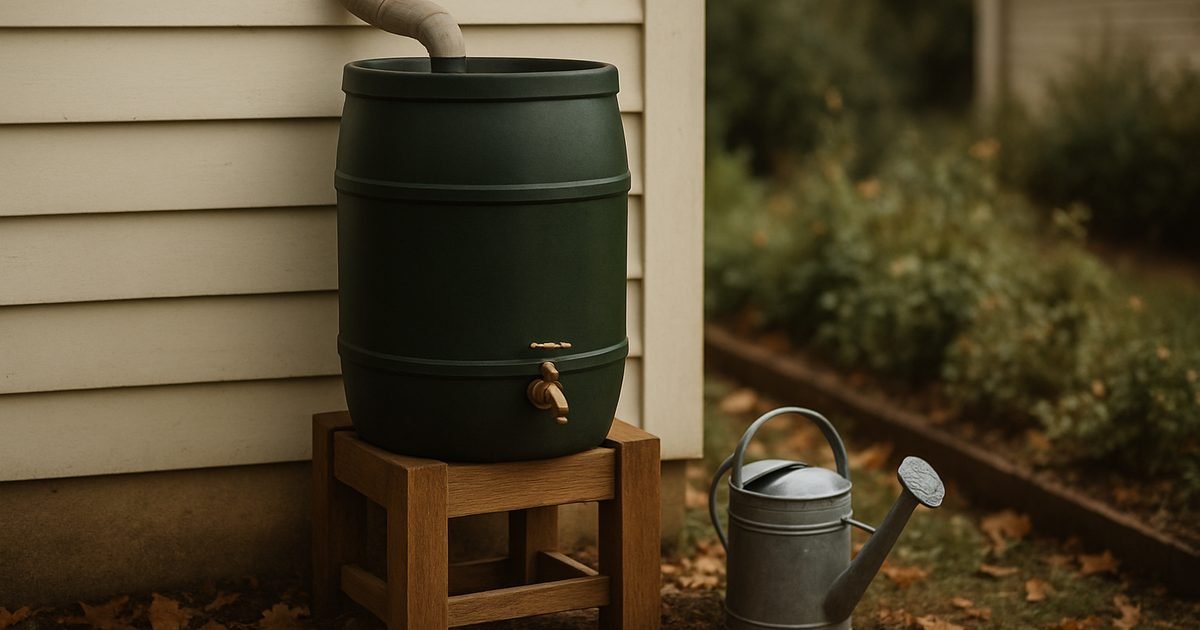
The simplest option is a 50- to 60-gallon barrel set under a downspout. You can buy ready-made barrels or convert a food-grade plastic drum. Look for:
- A tight-fitting lid, so children and animals can’t fall in.
- A fine screen over the inlet, to keep out leaves and mosquitoes.
- A spigot near the bottom and an overflow outlet near the top that directs extra water away from your foundation.
Set the barrel on a sturdy, level platform of concrete blocks or pavers. Water weighs about 8.3 pounds per gallon, so a full barrel weighs over 400 pounds. Raising it also gives you better water pressure for filling cans or attaching a short hose.
Linking barrels
Once you see how fast a barrel fills, you’ll probably want more. Connect several barrels with short hoses near the top so the overflow from one fills the next.
Larger tanks
For bigger gardens or livestock, consider an above-ground tank or cistern of several hundred to several thousand gallons. These cost more and need a solid base, but they hold a far more useful amount of water. Underground cisterns are the top tier and usually require a professional installer.
Keep It Clean With a First-Flush Diverter
The first few gallons of rain wash dust, pollen, leaves and bird droppings off your roof. A first-flush diverter catches that dirty water in a separate pipe before letting the cleaner water flow into your barrel. It’s an inexpensive add-on that makes a real difference in water quality. Pair it with gutter guards or regular gutter cleaning.
How Much Can You Collect?
Here’s a handy rule of thumb: each inch of rain falling on 1,000 square feet of roof produces roughly 600 gallons of water. To estimate your own:
- Measure the footprint of the roof area that drains to your downspout (length times width, in square feet).
- Multiply by 0.6 to get gallons per inch of rain.
- Multiply by the inches of rain in a typical month.
A modest 500-square-foot section of roof can fill a 55-gallon barrel in less than a quarter-inch of rain. That’s why linking barrels or upgrading to a tank is so common.
Smart Ways to Use Rainwater
- Watering the garden. Water at the base of plants, not on the leaves, especially on edible crops close to harvest.
- Houseplants and seedlings, which appreciate the soft, chlorine-free water.
- Livestock and poultry. Many homesteaders use it for animals, but keep containers clean and watch water quality.
- Washing tools, boots, pots and vehicles.
- Mopping floors and outdoor cleaning.
What about drinking?
Untreated roof water isn’t safe to drink. It can carry bacteria from bird droppings, debris and chemicals from roofing materials. If you ever need to use it for drinking or cooking, it must be properly filtered and disinfected first, for example by bringing it to a rolling boil for one minute. Systems designed for household drinking water need proper design and regular testing, so talk with your local health department before going that route.
Year-Round Maintenance
- Check screens and gutters monthly, and after storms.
- Use the water regularly so it doesn’t sit stagnant. If algae forms, empty and scrub the barrel.
- Prevent mosquitoes with tight screens. Mosquito dunks containing Bti are safe for plants, pets and wildlife.
- Winterize in cold climates. Before a hard freeze, drain barrels, disconnect them, and store them upside down or indoors. Reconnect the downspout so water drains away from the house.
- Patch small leaks with a waterproof sealant made for plastic.
Frequently Asked Questions
Is it legal to collect rainwater?
In most places, yes, and many towns encourage it. A few states have limits on how much you can store, so check your state and local rules.
Will a rain barrel attract mosquitoes?
Not if it’s sealed. A tight lid, a fine screen over every opening and regular use keep mosquitoes from breeding.
Can I water vegetables with rainwater from an asphalt shingle roof?
Many gardeners do, but water at the base of plants rather than on leaves, and wash produce well before eating it.
Rainwater is a gentle first step toward a more self-reliant homestead. Plug a barrel into the garden you’re planning from our backyard homestead steps, and add rain-barrel shutdown to your fall winterizing checklist.
Get a printable rainwater harvesting checklist in our free Garden, Water & Energy pack, available in our Free Downloads library.
Prefer to watch or listen? More practical homestead tips are on our YouTube channel — short, useful, no fluff. Subscribe on YouTube → The Homestead Frontier
Get Weekly Homestead Know-How That Actually Works
Practical tips on gardening, food preservation, DIY repairs and self-reliance, straight to your inbox. Free, no fluff.
Free. Unsubscribe anytime. We never share your email.