Must-Have Kitchen Tools for the Homestead (and What You Can Skip)
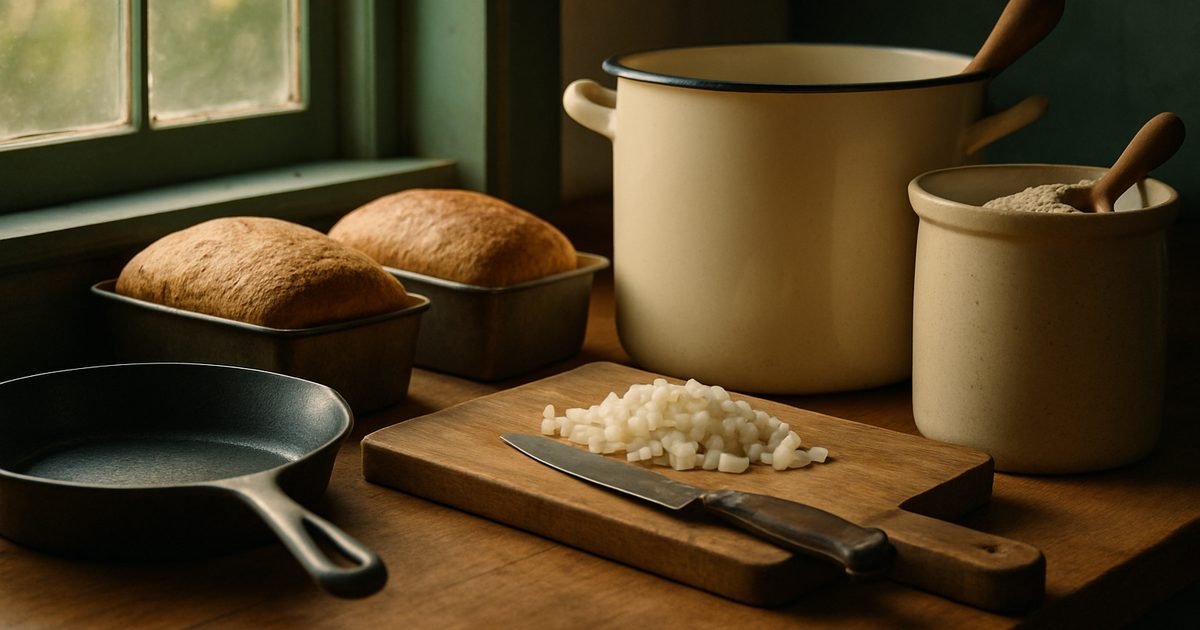
A homestead kitchen is a working kitchen. On a busy harvest day, it might turn out a pot of soup, two loaves of bread, a batch of jam and a tray of roasted squash, all before supper. The right tools make that work easier and more enjoyable, and the best ones last for decades.
You don’t need a showroom full of gadgets. A handful of sturdy, well-chosen tools will carry you a long way. Here’s our list of what really earns its place, and a few things you can skip.
Key Takeaways
- Buy fewer, better tools that can handle heavy daily use.
- Cast iron, a good knife and a big stockpot are the backbone of a homestead kitchen.
- Many of the best tools can be found secondhand at estate sales and yard sales.
- Add specialty equipment only once you know you’ll use it regularly.
The Everyday Essentials
Cast-iron cookware
If there’s one tool that defines the homestead kitchen, it’s cast iron. A skillet, a Dutch oven and maybe a griddle will handle frying, baking, braising and roasting, on the stove, in the oven, or over a campfire. Cared for properly, cast iron lasts for generations and gets better with age.
Keep it simple: wash with hot water and a little soap if needed, dry it right away on a warm burner, and rub in a thin coat of oil. Rusty yard-sale skillets can be scrubbed and re-seasoned like new.
A good chef’s knife (and a way to keep it sharp)
A sharp, well-balanced chef’s knife makes chopping vegetables, breaking down a chicken or slicing bread faster and safer. Add a paring knife and a serrated bread knife and you’re set. A sharpening stone or a honing steel keeps them in good shape, and a dull knife is more dangerous than a sharp one because it slips.
Sturdy cutting boards
Get at least two large boards: one for raw meat and one for everything else. Wooden and plastic boards both work. Just keep them clean and replace any with deep grooves.
A big stockpot
A large, heavy-bottomed stockpot is a workhorse for soups, stocks, big batches of beans and blanching vegetables for the freezer. Turning bones and vegetable scraps into rich stock is one of the most frugal homestead habits there is.
Mixing bowls, measuring tools and a kitchen scale
Several sizes of sturdy bowls, measuring cups and spoons, and a digital kitchen scale. A scale makes bread baking more consistent and helps when recipes call for produce by weight.
For the Home Baker
Fresh bread is one of the simple joys of homestead life.
- Loaf pans: Metal, glass and stoneware all work. A couple of sturdy pans will last for years.
- Baking sheets and a cooling rack.
- A bench scraper and a large bowl for mixing and shaping dough.
- A stand mixer (optional): A heavy-duty mixer with a dough hook saves your arms if you bake several loaves a week. Many great bakers knead by hand, though, so don’t feel you need one to start.
- A grain mill (optional): If you love baking, grinding your own flour from stored wheat berries gives you fresh flour on demand and pairs well with long-term food storage. It’s a specialty tool, so wait until baking is a regular habit.
For Putting Up the Harvest
When the garden comes in, these tools save time:
- Colanders and a salad spinner for washing produce.
- A food mill or strainer for sauces and purées.
- A food processor for chopping large batches.
- Freezer containers and bags, plus labels and a marker.
- Canning equipment, if you’re ready to start canning. Our canning supplies checklist lists exactly what you need, and our water bath canning guide shows how to use it.
Nice to Have Later
- An enamel or glass crock for fermenting sauerkraut and pickles.
- A chest freezer for meat, berries and blanched vegetables. It’s one of the best investments a homestead can make.
- A pressure cooker for speeding up beans, stocks and tough cuts. Remember that a pressure cooker isn’t a pressure canner.
- Butter churn or yogurt-making gear if you have a dairy animal.
What You Can Skip
- Single-use gadgets that do one small job a knife already does well.
- Cheap nonstick pans that wear out in a year or two.
- Large appliances you haven’t tested. Borrow a friend’s mixer or dehydrator before you buy your own.
- Matching sets. Buy individual pieces you’ll actually use instead of a full set with pieces you won’t.
Shopping Smart
Some of the best homestead kitchen tools are old ones. Estate sales, farm auctions and thrift stores are full of cast iron, heavy stockpots, crocks, bread pans and hand-crank tools at a fraction of new prices. Check cast iron for cracks and warping, and check pots for loose handles. Everything else can usually be cleaned up.
Frequently Asked Questions
What’s the first tool I should buy for a homestead kitchen?
A cast-iron skillet. It’s inexpensive, versatile and practically indestructible.
Do I need a stand mixer to bake bread?
No. Hand kneading works beautifully. A mixer just saves time if you bake often.
Is it worth buying a grain mill?
Only if you bake regularly and want fresh flour. Otherwise, store good-quality flour and rotate it.
Good tools make scratch cooking a pleasure. Stock your shelves with our guide to stocking a homestead pantry, and try a few of the simple homestead habits you can start today.
Get printable off-grid cooking and baking and homestead meal planning checklists in our free Food, Pantry & Kitchen pack, available in our Free Downloads library.
Prefer to watch or listen? More practical homestead tips are on our YouTube channel — short, useful, no fluff. Subscribe on YouTube → The Homestead Frontier
Get Weekly Homestead Know-How That Actually Works
Practical tips on gardening, food preservation, DIY repairs and self-reliance, straight to your inbox. Free, no fluff.
Free. Unsubscribe anytime. We never share your email.